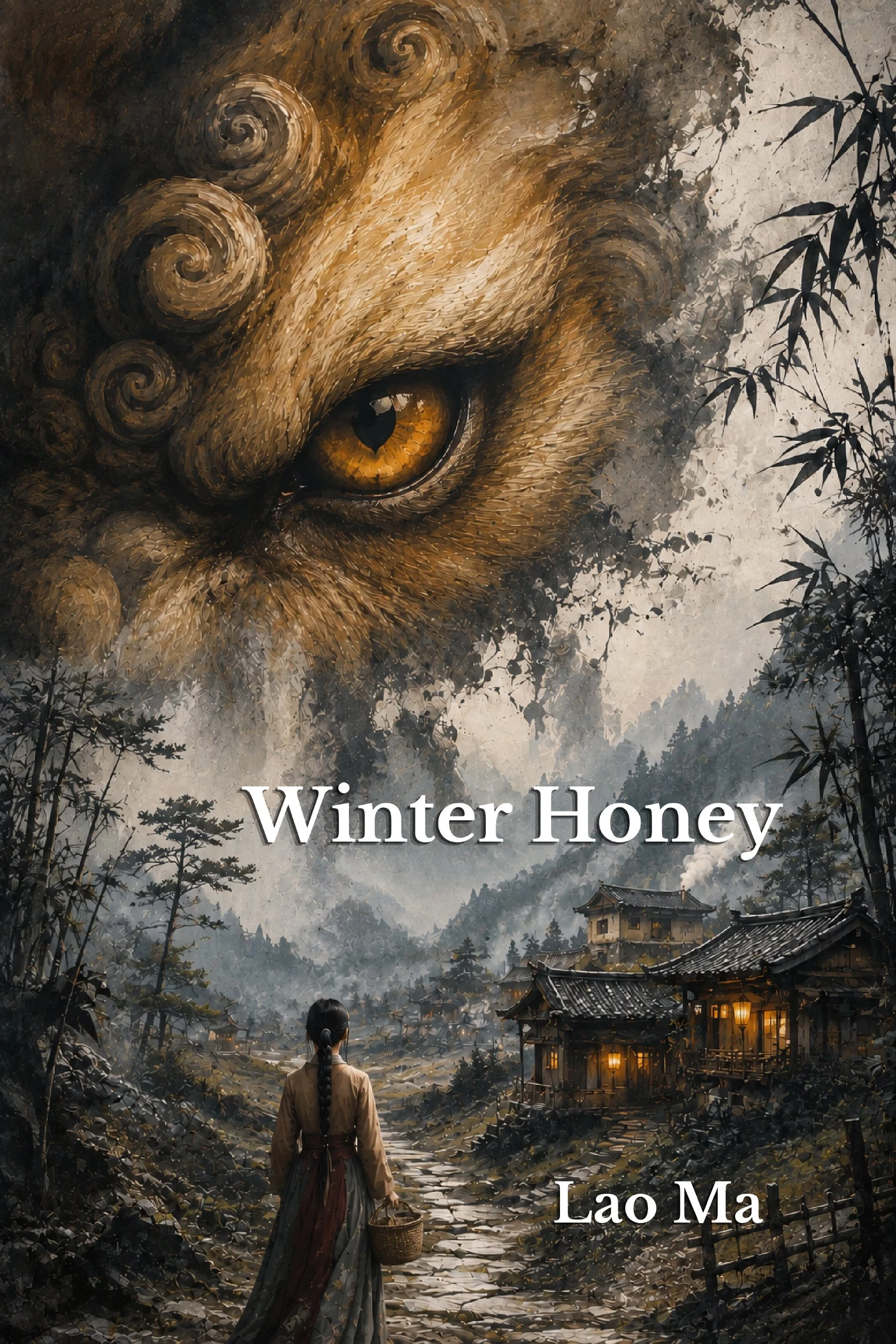
Winter Honey:
Ancient Guardians, Hakka Culture, and the Spirit World of Rural China
This story is set in a village in the hills of Fujian province, China. The people of the village have lived the same way for generations. They grow vegetables, raise chickens and ducks, work the terraced fields, and waste nothing. Life moves slowly here, shaped by the land and the seasons. It is a good life, but a hard one.
This is where Ah Ying lives. She is young, and loss has already found her more than once. She keeps her head down and gets on with things. She does not yet know that everything is about to change.
At the edge of the village lives Lao Huang, an old man who keeps bees and tells stories that the village has long since stopped listening to. He speaks of the hills as though they hold something the rest of the world has forgotten. Most people smile and pour more wine.
But the hills are not empty.
Something old moves through this story, at the edges, in the shadows, in the places where the grass does not bend the way it should. It watches. It waits. And slowly, without announcement, it finds its way to Ah Ying.
This is a quiet book. But underneath the quiet, something is alive.
Meet the Characters of Winter Honey
Carrying a quiet grief, Ah Ying moves through the familiar paths of her Hakka village—until unexpected discoveries begin to change the way she sees the mountains, her home, and her place within them.
Lao Huang is an elderly beekeeper who knows the mountains better than most. Through his hives, stories, and quiet wisdom, he preserves traditions—and secrets—that have endured for generations.
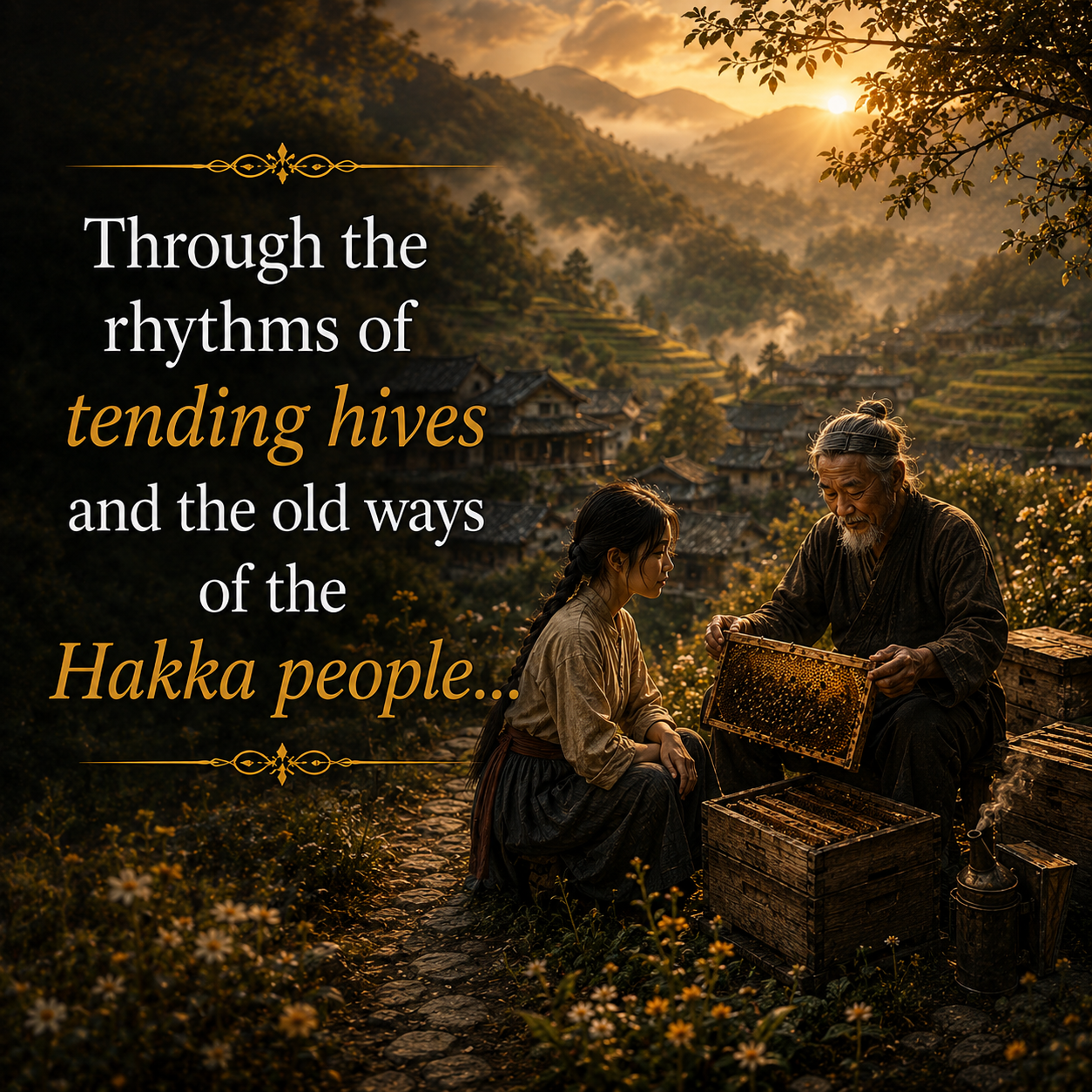
Beekeeping, village customs, family ties, and the rhythms of rural life bring the Hakka world of Winter Honey to life, revealing a culture shaped by resilience, memory, and the land.

Beyond the paths and forests lies something the villagers have nearly forgotten. In Winter Honey, the physical and spirit worlds quietly intersect—and ancient guardians may still be watching.
Foreword
I came to the Hakka world knowing nothing about it.
It was Zhiying who took me there, deep into the villages of Fujian province. She introduced me to her family and her friends, the people she had grown up with. I was never a guest. From the first night, I was simply family. I was pulled to the table, and that was that.
Somewhere across those many nights, between the food and the mǐjiǔ and the bǎijiǔ, a name appeared. It was around large round tables that never seemed to empty, with stories going in every direction and more food always arriving. They knew my name was Marshall, but it didn't sit easily in Hakka mouths. So it became Lǎo Mǎ — Old Horse. Close enough, and better besides. It stuck.
The Hakka are hard-working people who also know how to play. Their culture is rich and runs deep. And they are generous in a way I had never seen before. They are not generous when they have plenty, but generous with whatever they have. Eggs, ducks, chickens, and vegetables are pressed into your hands as you leave. You cannot refuse, and you do not try.
Ah Ying's world is fictional, but it is built from real places, real people, and real warmth. That is the warmth I found sitting around those tables, listening to stories I could only half follow, and laughing at jokes explained to me afterward.
This book would not exist without those nights and those people.
Lǎo Mǎ